Statuesque, sculptural and seasonally evergreen, holly bears the crown in any winter landscape says LOUISE MIDGLEY but you need to plant soon to guarantee a berry Christmas
It’s only after the leaves have fallen and perennials have retreated underground that the bare bones of a garden become exposed and the importance of plants that give winter interest become all the more apparent.
Strategically placed winter flowering shrubs and evergreens in various tones of green can lift the design of a garden with their appealing structure and form.
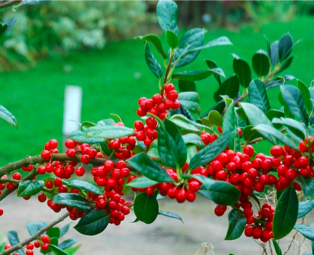
None more so than varieties of holly bedecked in glossy foliage and cheery crimson berries. As plants go, they are one of the most accommodating whatever your soil or aspect. Happy in coastal exposure, deep-shaded woodland, nestled in a hedge or as a stand-alone shrub in full sun.
The majority of named hollies are dioecious; meaning the plants have either male flowers that produce an abundance of pollen to fertilise the female flowers or female flowers that turn into berries. In order to ensure copious berries make sure you have at least one male cultivar in the vicinity of the female plants.
It’s all in the name
Names of hollies however are very misleading. Plant breeders have caused a lot of confusion by giving some of the handsome male specimens rather inappropriate names such as ‘Silver Queen’ and ‘Golden Queen’ and female varieties just as quirky titles as ‘Golden King’ and ‘Martin’.
There are a few self-fertile hollies that can berry on their own. Ilex aquifolium ‘J C Van Tol’ is a good example. This striking plant with a pyramidal habit makes a great candidate for small gardens where space is at a premium.
Its vibrant scarlet berries glow brightly as they cluster along the purple- tinged stems beside spineless glossy foliage.
For something a little different Ilex aquifolium ‘Bacciflava’ will get tongues wagging with generous clusters of showy yellow fruits. Wonderful planted alongside an orange-berried pyracantha and red berried cotoneaster.
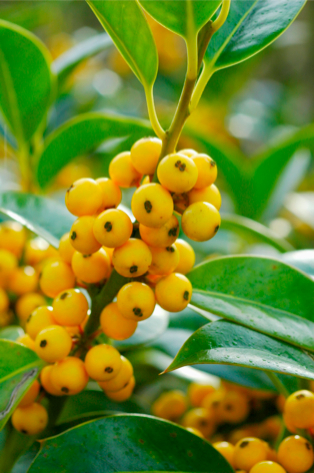
Keep in shape
Topiaried holly creates an indelible impact on the landscape but the beautiful spiral, pyramid, ball or lollipop shapes can only be maintained at the expense of berries.
It’s well worth the sacrifice if you choose plants with an interesting leaf colour such as the yellow hues of ‘Golden King’ or the variegated bright hues of ‘Handsworth New Silver’.
When pruning into shape don’t be afraid to cut back hard and above all don’t forget to wear long sleeves and sturdy gloves.
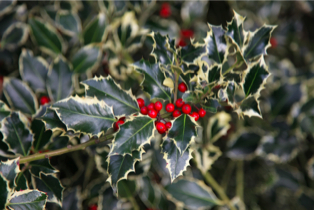
An outstanding female holly that carries the prestigious RHS Award of Garden Merit is Ilex aquifolium ‘Argentea Marginata’
This plant has dark green prickly leaves with a bright cream margin around the outer edges, tinged with shrimp-pink. It’s robust enough to grow in inner cities or coastal sites as it copes well with pollution and salt-laden air.
Attracting wildlife
Hollies trees, hedges and topiaried shapes are the ultimate in wildlife friendly plants.
The flowers provide pollen and nectar for a wide range of insects, including, if you’re lucky, the little holly blue butterfly. The berries magnetise hungry birds from all around in winter and mature specimens give protection to nesting birds in spring.
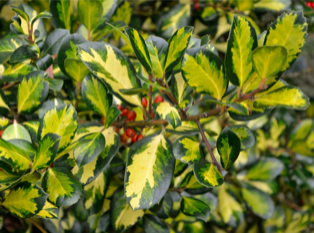
Ilex x altaclerensis ‘Lawsoniana’ is much loved by garden birds for its burgeoning bunches of brown-red berries throughout the winter months. Its unusually shaped, almost spineless leaves have a splash of vibrant yellow across the centre making it stand out from the border.
Late autumn/early winter is the ideal time to plant. The soil is moist and still warm from the slow heat absorption of summer and this provides the emerging root system with the perfect conditions for strong growth to support the plant.
An extensive variety of unusual and popular holly plants can be bought from Bluebell Arboretum and Nursery www.bluebellnursery.com / 01530 413700 and Crocus www.crocus.co.uk / 01344 578 000