 Snowdrops are at their most magnificent in February and worth seeking out in gardens across the country says LOUISE MIDGLEY
Snowdrops defy winter; their noses push through the ground as early as December and by February these delicate, resilient little plants are in full sail heralding the start of longer days and a new year in the garden. Galanthus nivalis, a British native wildflower can be found colonising grassy banks and carpeting great swathes of ground with its pure white beauty. While most flowers look beautiful en masse, the simple charm of an abundance of these single flowered snowdrops is breathtaking. 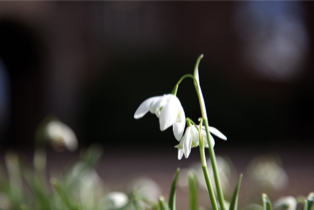 Gatherings of Galanthophiles Although all snowdrops are fundamentally white and grow no more than 25cms high, there are numerous cultivars. On closer inspection you can easily determine the distinctive markings that separate the varieties. Double blooms, frilly edges, yellow splashes, a myriad of subtle differences that makes each unique plant a must have for the avid collector or Galanthophile as they affectionately referred to. Galanthophiles gather together in winter from all corners of the globe for Galanthus Galas, talks and seminars, braving all weathers to inspect and admire rare plants.
Garden worthy varieties
For the rest of us mere mortals, growing snowdrops of any variety in our gardens will delight whether planted in drifts or clumps to punctuate the border. Many snowdrops are scented and have a honeyed fragrance. G. ‘S.Arnott’ is taller than the native nivalis, with larger blooms and is intensely rich in perfume. It has glistening white flowers with an inverted V-shaped green mark at the tip of each inner tepal. Also deserving of a place in the garden is G. ‘Bertram Anderson’ for it’s clump-forming habit, early flowering nature and large scented flowers. Both varieties are widely available from garden centres as well as online retailers.
Easy cultivation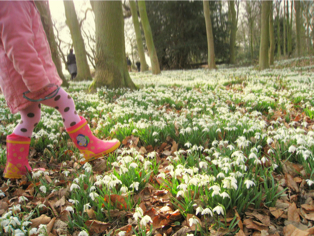
Snowdrops are tough, trouble free plants to care for. They multiply freely by both self-seeding and producing offshoots from the bulbs. They prefer moisture retentive soil and will thrive in sun as well as semi-shade. Bulbs are sold ‘in the green’ on completion of flowering. Plant little bundles of the bulbs deeply about 10 cms below the soil surface. Established clumps that have become congested can be split into smaller sections for replanting after the top growth has been allowed to die back. Snowdrops and other winter bulbs such as crocus, aconites and hyacinths are good substitutes planted in herbaceous borders before perennials burst forth in spring.
Hodsock Priory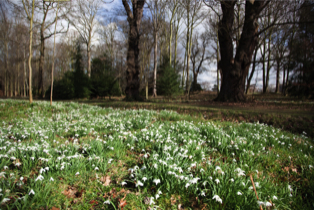
See naturalised snowdrops at their best in gardens open across the country. A visit to Hodsock Priory in Nottinghamshire (pictured top), boasts 12 acres of snowdrop-covered woodland. There are accessible paths for wheelchair users or children in buggies and the opportunity to take advantage of free daily talks on the history of Hodsock. Round off the experience with a visit to the Snowdrops tearooms where they serve tempting homemade food from local produce. The window to visit is just four weeks from February 1 to March 2 and it is open daily from 10am to 4pm. www.hodsockpriory.com All photographs shown have been kindly provided by George Buchanan, owner and manager of Hodsock Priory